
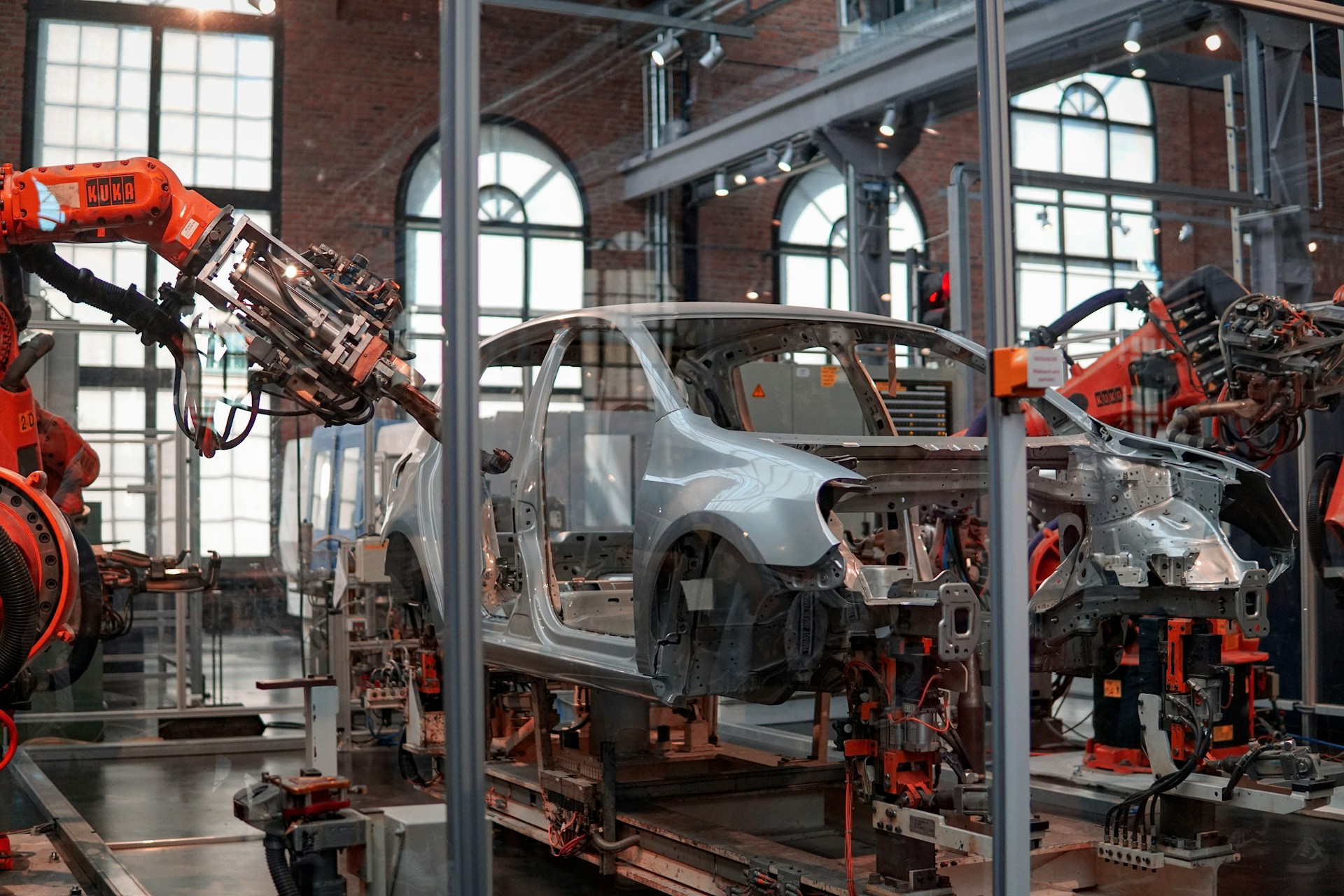
Just like any other manufacturers out there across diverse markets the automotive industry did not stay on the sidelines just watching technology develop but started to adopt and implement it through its many processes.
Indeed the majority of trades obtained a marked leverage via tech tools, from a simple website to Artificial Intelligence (AI), but also 3D printing. Yes, the latter has been with us for ages now, and at first companies were hesitating into venturing into this sector, however slowly but surely 3D printing is being more present in various segments, from medical to education.
So, it comes as no surprise that 3D printing started also attracting the attention of the automotive industry. Let us delve deeper to see why utilise 3D printing, how can it enhance this particular area, the benefits and way forward ahead.
Core Applications of 3D Printing
There are many different ways how 3D printing can be applied throughout the automotive manufacturing chain. Automakers use 3D printing for design, prototyping, tooling, sampling, and customised parts.
- Design & Concept – 3D printing enables the production of smooth, accurate and highly detailed 3D models
- Prototyping – at the stage before manufacturing begins, prototyping is made more efficiently and swifter thanks to 3D printing, thus prototypes are validated quicker
- Tooling & Pre-Production Sampling – inexpensive samples and tools production like thermoforming tools and moulds, together with swift production of fixtures, grips and jigs are produced via 3D printing, also eliminating excess waste or future production losses, thus reducing costs
- Customised Parts – 3D printing is also utilised to cater for any on-demand parts as needed or requested by clients, fitting various vehicles
Customised & Spare Parts
3D printing enables fast, cost-effective production of custom and low-volume parts for both prototypes and final components.
3D printing which is also known as additive manufacturing, is also very useful when it comes to parts, and its impact is felt even more when it is applied for low volume production, for one-off prototypes and concept models.
For customised parts, the ability to produce complex, tailor-made parts swiftly and cost effectively comes as the main benefit of utilising 3D printing in the automotive industry. One main renowned testimonial is the famous brand Audi, which used six different feedstock materials in its prototyping efforts, such as single-piece taillights in both transparent and colours, with the latter also holding various shades and tints, and all this directly from the 3D printer thus avoiding the need of multi-layered construction. This led to Audi being able to reduce its prototyping lead times by up to 50% vis a vis the traditional manufacturing method.
A similar approach is utilised for the spare parts segment when applying additive manufacturing in the process, starting from prototypes to the end product. As one can imagine there are a myriad of parts which can be obtained from 3D printing, from Y air flow splits, front grills and electrical clips, to customised performance racing type as ordered by clients.
Again, we have another well-known automotive brand as testimonial to additive manufacturing namely Porsche, who started using 3D printing to manufacture its own on-demand customised spare parts. So, if for example an original clutch release lever needs to be replaced and it was made out of grey cast iron, Porsche`s spares section will provide a new one utilising selective laser melting via additive manufacturing.
3D Printing in Formula 1
Formula 1 teams use 3D printing to create complex moulds and components faster and with higher precision.
Not only Audi and Porsche, but additive manufacturing is also being explored into by Formula 1, as they seek to adopt this type of technology to produce automotive parts in F1 cars!
Involving also hardeners and sand, Formula 1 designers are testing the creation of engine block moulds. Molten metal is then poured into these moulds creating blocks, and this process is swifter and more precise than the traditional process of tooling moulds.
Thanks to 3D printing, F1 engineers are free to try never-used-before types of hardeners, glues, and sand to regulate aluminium cooling inside the mould.
Thus, as one can notice and appreciate, additive manufacturing holds a direct and significant impact on the final product in the end as well.
Impact of 3D Printing in Numbers
Forecasts show rapid growth, with 3D-printed automotive parts expected to reach billions in market value.
Across the automotive industry at first 3D printing was mainly utilised for concepts, models and prototypes, helping to check a particular car fit and form. However, as both the automotive business and additive manufacturing progressed, the industry recognised the potential of 3D printing and started venturing and involving more of this technology in their processes. One good example of this is the Fused Filament Fabrication (FFF), a type of 3D printing which at first was used for prototypes but now it is producing automotive end parts.
According to the Global Automotive Outlook 2017, 3D printing car models in the automotive industry can leverage global sales to 114 million per year by 2024. As for the parts industry, the projections predict a height of about 17 billion USD by end of 2025.
We can`t but also mention that Machine Design had envisaged that 3D printing consumption by the automotive industry will reach the height of 530 million USD by the end of 2021.
The Benefits of 3D Printing
3D printing cuts costs, speeds up production, enhances in-house control, and reduces waste in automotive manufacturing.
3D printing then brings a plethora of advantages to the automotive industry, to begin with the elimination of expensive and time-consuming production.
An automotive company holding 3D printing prowess in-house avoids any information leaks or intellectual property infringements as all the production takes place on one site.
Agility in the manufacturing process is also increased by minimising the turnaround time of all industrial stages within the automotive trade.
Finally, thanks to 3D printing technology in the automotive industry sustainable manufacturing is being pushed while material wastage and consumption are being reduced to an extent.
FAQ – 3D Printing in the Automotive Industry
- How is 3D printing used in the automotive industry?
It is used for design, prototyping, tooling, and producing custom and spare parts. - Why do car manufacturers use 3D printing?
To speed up development, cut costs, and create complex components that traditional methods can’t produce easily. - Does 3D printing reduce production time?
Yes, it accelerates prototyping and pre-production, enabling faster validation and shorter time-to-market. - Can 3D printing be used for end-use automotive parts?
Yes, especially for low-volume production, customised components, and performance parts. - Which automotive brands use 3D printing?
Major brands like Audi, Porsche, and several Formula 1 teams actively use additive manufacturing. - Is 3D printing cost-effective for automotive companies?
Absolutely — it minimizes tooling costs, reduces waste, and cuts down development cycles. - Can 3D printing help produce spare parts on demand?
Yes, allowing manufacturers to produce rare, discontinued, or customised parts without large inventories. - How big is the market for automotive 3D printing?
Forecasts estimate the parts market reaching around 17 billion USD by 2025. - Does 3D printing improve sustainability in the automotive industry?
Yes, by reducing waste, limiting overproduction, and enabling more efficient material usage.
In Conclusion
Additive manufacturing is speeding up automotive development, lowering costs, and enabling faster time-to-market.
Additive manufacturing is indeed assisting the automotive industry across its various facets, from mock-ups like visual physical 3D prototypes or concept models to production parts, boosting the need for speed every company in this market aspires to.
Thanks to 3D printing the road ahead for the automotive industry looks bright, as the trend in additive manufacturing grows, while the incentives are palpable namely cost, efficiency in production and faster time to market.